Tour Revenue Optimization With Pricing Rules
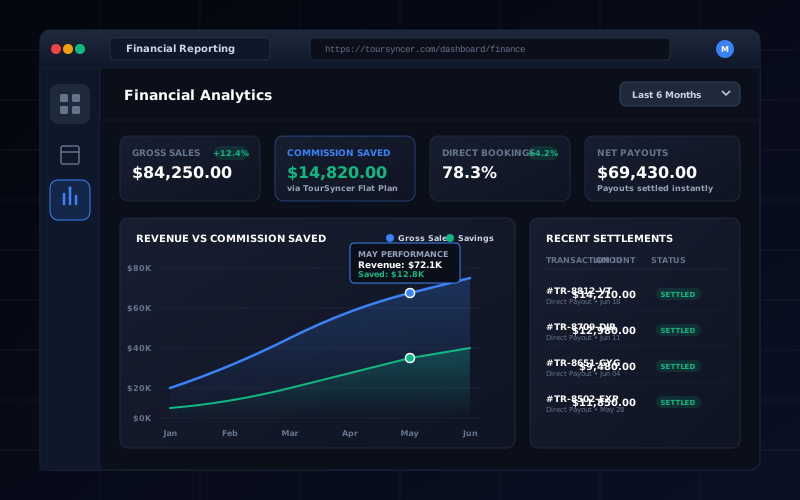
Use guest, group, weekday, date, and seasonal tour prices with capacity and booking reports—without claiming an AI demand-pricing algorithm.
The short answer
TourSyncer helps operators execute a pricing strategy they define. It supports prices by guest type, group size, weekday, date, and season, plus free tours. The system applies configured rules to the booking workflow.
It does not currently claim AI demand forecasting, automatic price increases based on live demand, competitor-price monitoring, profit-margin optimization, or capacity-triggered discounts.
Five pricing levers TourSyncer supports
Guest type
Set distinct adult, child, infant, senior, or student prices where appropriate.
Group size
Configure group-based rates for private parties, families, schools, or corporate bookings without manually recalculating every quote.
Weekday
Use different prices for quieter weekdays and high-demand weekend schedules when the operator has chosen that strategy.
Date
Set a specific price for a holiday, event, or exceptional date.
Season
Configure peak, shoulder, or off-season pricing periods. No algorithm changes the number unless an operator changes the rule.
Revenue workflow
- Export or review booking and financial reports.
- Calculate occupancy and average booking value outside unsupported predictive claims.
- Choose the price rule and effective dates.
- Test the total for every guest type and group threshold.
- Publish the rule.
- Review bookings, refunds, and customer response after a defined period.
- Change the rule deliberately and retain the decision rationale.
Metrics to calculate
- Booked guests divided by configured departure capacity
- Gross booking value by product and schedule
- Average booking value
- Refund value and rate
- Direct versus manual booking mix
- Revenue by guest type or configured season
- TourSyncer subscription and Stripe processing cost kept separate from booking revenue
Do not call gross booking value “profit” unless variable cost, staff cost, supplier cost, tax, refunds, and overhead are included.
Suitable businesses
Rule-based pricing works for food tours, cooking classes, guided attractions, winery or brewery tastings, safaris, retreats, city tours, and any business with predictable calendar or customer tiers.
See TourSyncer's pricing-rule feature for the current controls and limitations.