Seasonal Tour Pricing & Invoices: Maintain Full Tax Control
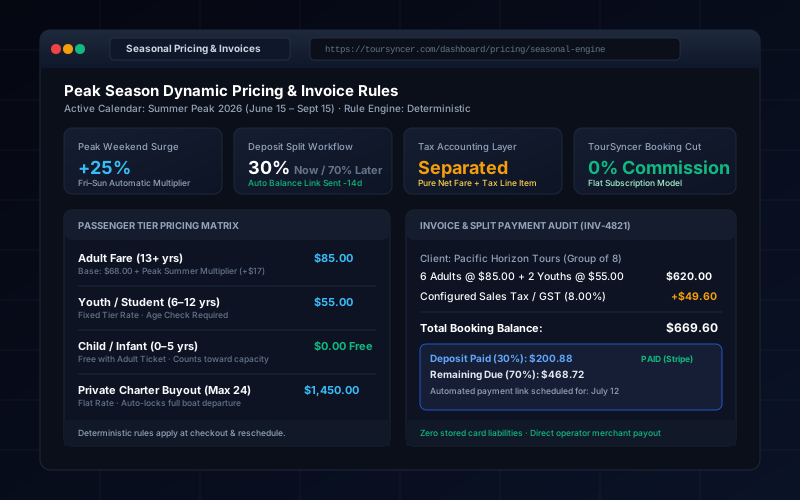
How tour operators automate dynamic seasonal pricing, deposit schedules, and payment links without creating tax compliance or accounting reconciliation chaos.
The Short Answer: Balancing Pricing Automation with Tax Control
Tour operators automate seasonal pricing by programming deterministic rules based on departure dates, days of the week, age tiers, and group sizes. Payment workflows automate initial deposits and balance-due payment links, while maintaining strict separation between collected processing revenue and configured regional sales tax obligations.
Dynamic pricing for tour and activity companies should never resemble airline-style black-box surge pricing. Travelers distrust rates that fluctuate between browser refreshes, and operators cannot manage cash flow when pricing logic is opaque. The gold standard is transparent, rule-based pricing: clear calendar dates, predictable passenger tiers, and automated balance invoicing that protects your margins without confusing your bookkeeper.
What Dynamic Pricing for Tours Means (And What It Is Not)
In the tour industry, "dynamic pricing" is frequently misunderstood:
- What it is NOT: An autonomous machine-learning bot that monitors competitor websites and jacks up prices 40% on sunny afternoons. That model alienates direct customers, creates guest disputes at the dock, and causes severe reconciliation nightmares.
- What it IS: A calendar-driven pricing engine configured directly by the operator. You decide in January that July weekends carry a +25% premium, Tuesday mornings carry a 15% discount, and children under 5 travel free. The booking system strictly enforces those exact rules.
[Base Fare: $68.00] ──> [July Peak Multiplier: +$17.00] ──> [Adult Checkout: $85.00]
                                                                     │
                                                   ┌─────────────────┴─────────────────┐
                                                   ▼                                   ▼
                                        [Net Revenue: $85.00]                [Configured Tax: $6.80]
When pricing logic is deterministic, quotes remain consistent for guests, tour margins stay protected, and every transaction traces back to an explicit business rule.
The Operational Matrix: Dynamic Pricing & Tax Mechanics
| Pricing & Billing Mechanism | Deterministic Automation Rule | Management Control Boundary |
|---|---|---|
| Seasonal Rate Changes | Auto-applies price lifts on pre-selected calendar date ranges | Manual overrides permitted for custom VIP and private itineraries |
| Age / Guest Tiering | Automatic calculation per headcount (Adult, Senior, Child, Infant) | Enforcing physical verification of child ages during check-in |
| Balance Payment Links | Automated email dispatch 14 days prior to departure | Decision whether to auto-cancel or extend grace periods for unpaid balances |
| Sales Tax Configuration | Percentage calculation added as a distinct line item | Legal determination of taxability, exemptions, and government remittances |
Configuring Passenger Tier Pricing Rules
A one-size-fits-all ticket price leaves money on the table and damages family bookings. TourSyncer structures pricing across two simultaneous axes: Who is traveling and When they are traveling.
1. Age-Based Passenger Tiers
- Adults (Full Fare): The benchmark rate reflecting full capacity allocation.
- Youth / Students (Concession): A reduced rate (e.g., $55 vs. $85) that opens up school group and budget traveler demand.
- Children & Infants (0–5 yrs): Often priced at $0.00, but still tied to vehicle/vessel capacity so a free infant does not cause an illegal maritime or transportation overload.
2. Group Rates and Private Buyouts
For corporate retreats or wedding parties, volume discounts should trigger automatically:
- Parties of 8+ automatically receive a 10% group rate reduction at checkout.
- Private charter buyouts lock the entire departure capacity (e.g., 24 seats) at a fixed package price ($1,450.00), preventing any other travelers from booking that departure slot.
Invoicing Workflows: Deposits, Split Payments & Payment Links
High-ticket tours, multi-day itineraries, and private group charters cannot always demand 100% payment upfront without hurting conversion rates. An automated split-deposit workflow solves this:
- The Booking Commitment (e.g., 30% Deposit):
The customer pays a 30% deposit at online checkout via Stripe. This payment immediately decrements availability, creates the reservation record, and places the passenger on the live manifest. - The Scheduled Balance Due Link:
Instead of storing credit cards and attempting risky automated recurring charges (which frequently fail due to expired cards or fraud triggers), the system generates an encrypted, single-use payment link emailed to the guest 14 days prior to departure. - Manager-Controlled Grace Periods:
If a client fails to pay their balance 48 hours before departure, software should alert dispatch—not silently delete the reservation. The manager retains the authority to call the guest, grant an extension, or release the seats.
The Tax Separation Principle: Payment Processing vs. Tax Compliance
One of the most dangerous traps in tour management software is treating collected revenue as pure gross income.
Why Gross Pricing Breaks Accounting
If you sell a tour for $100 and that includes an 8% state sales tax or provincial GST/HST, your business did not make $100. It made $92.59 in net revenue and took on a $7.41 tax liability to the government.
In TourSyncer's invoicing engine, every financial transaction enforces clear separation:
- Itemized Line Items: The base fare, optional add-ons (such as wetsuit rentals or souvenir photos), and configured tax percentages appear on separate rows.
- Audit-Proof Receipts: Customers receive itemized receipts displaying the exact tax registration number and rate applied.
- CPA-Ready CSV Exports: At the end of the month, your accounting team can export pure net operating revenue cleanly separated from collected tax liabilities.
Important Boundary: TourSyncer calculates and records taxes based on percentages you configure. It does not file taxes, verify place-of-supply nexus rules, or provide tax advice. Always review your regional obligations with a certified tax professional.
How Date-Aware Pricing Protects Rescheduling Margins
Consider a common operator scenario: A customer books a 3-hour harbor cruise for an off-peak Tuesday in May at $45 per ticket. In June, they call to reschedule for a peak Saturday in July, where the active rate is $65 per ticket.
- In a manual spreadsheet system: The dispatcher moves the booking date in the calendar. The original $45 price tag follows the customer, and the business quietly loses $20 per passenger on prime peak inventory.
- In TourSyncer’s date-aware engine: When the reservation is moved to the July departure, the system detects the date change, recalculates the fare difference ($20 per seat), and provides a secure link to collect the upgrade balance before the ticket is reissued.
4-Step Rollout: Deploying Your Seasonal Pricing Strategy
- Build Your Rate Calendar: Identify your high-demand holiday weekends (Memorial Day, July 4th, Labor Day) and assign your seasonal percentage lifts.
- Establish Guest Tiers: Set distinct rates for adults, children, and private charter buyouts.
- Configure Deposit Rules: Enable 20%–30% initial deposits for orders over $500, setting automated balance reminders for 14 days out.
- Audit Tax Configuration: Input your verified local sales tax or VAT rate, run a test checkout, and confirm that invoices display separated line items.
Conclusion
Automating seasonal pricing and invoices gives tour operators the best of both worlds: maximized revenue during peak dates and flawless accounting reconciliation. By relying on transparent calendar rules, structured deposit payment links, and separated tax records, you eliminate manual spreadsheet errors while maintaining total control over your business.
Learn more about TourSyncer’s dynamic pricing engine or explore our transparent software pricing.
Frequently asked questions
Does TourSyncer use AI algorithms to automatically surge tour prices?
No. TourSyncer uses deterministic, operator-configured calendar rules. You set the specific summer rates, weekend premiums, and holiday surcharges. The software enforces your rules without unpredictable algorithmic rate changes.
What happens to the price if a customer reschedules from shoulder to peak season?
TourSyncer automatically calculates the rate difference based on the new date’s active pricing calendar, allowing operators to collect the additional balance seamlessly.
Can TourSyncer charge customer credit cards automatically for remaining balances?
Rather than risky automated stored-card charging, TourSyncer generates automated, secure payment links sent to the guest, giving operators full control over balance collections and cancellation grace periods.
How are taxes displayed when multiple guest tiers are booked together?
Applicable tax percentages are calculated on the total taxable subtotal and displayed clearly as an itemized line item on both the online checkout receipt and the official PDF invoice.
Can different tours have independent seasonal rate calendars?
Yes. Each tour product can have its own dedicated pricing calendar, blackout dates, age tiers, and group buyout rules.
Does TourSyncer file sales tax or GST/HST on our behalf?
No. TourSyncer captures and reports configured tax amounts on receipts and accounting exports. Operators remain responsible for tax registration, rate accuracy, and government filing.